February 25, 2022
By Adam DuBard, Political Analyst
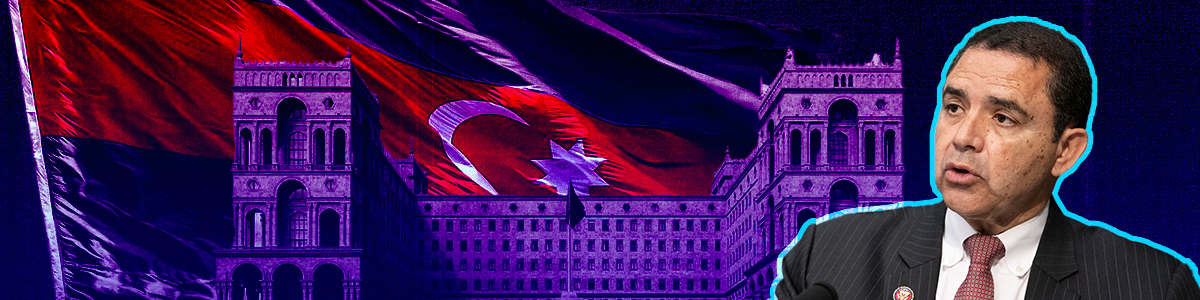
In one of the latest corruption scandals to hit Capitol Hill, the FBI raided the home of Congressman Henry Cuellar (D-TX) in January of this year. According to ABC News, Rep. Cuellar is under investigation for his alleged ties to Azerbaijan lobbyists, underscoring how American corruption can take forms both domestic and foreign.
While much was made of foreign lobbyists attempting to purchase influence during the Trump administration, this instance highlights how corruption funded by foreign actors reaches far beyond one president. It is, in fact, a serious bipartisan failure.
RepresentUs has been denouncing the various forms of corruption afflicting American democracy, from members of Congress trading stocks to deep-pocketed donors influencing policies and profiting off of taxpayers. This newest scandal featuring Rep. Cuellar, however, highlights another issue: how foreign governments attempt to exploit weak anti-corruption laws to purchase influence.
As the Intercept has reported, Rep. Cuellar’s ties to Azerbaijan go back nearly a decade. In 2013, he took a $20,000 trip with his spouse to Turkey and Azerbaijan sponsored by a group called the “Turquoise Council of Americans and Eurasians.” The leader of that group at the time was Kemal Oksuz, who in 2018 pleaded guilty for organizing a separate Congressional trip that was funded by a foreign government.
In the meantime, Rep. Cuellar has maintained close ties with Azerbaijan, serving as co-chair of the Congressional Azerbaijan Caucus and meeting repeatedly with Azerbaijan officials. According to the Intercept, Rep. Cuellar has consistently advocated for Azerbaijan interests on Capitol Hill. After the brutal war between Azerbaijan and Armenia in 2020, Rep. Cuellar attempted to persuade his colleagues to only allow humanitarian aid through the government of Azerbaijan or U.N. institutions, rather than the Armenian government.
On Capitol Hill, Corruption is a Disease
Perhaps the most disappointing aspect of this story is that party leaders continue to support members engaging in this kind of corruption. Unfortunately, it’s simply how Congress operates. As Open Secrets, a nonpartisan research center dedicated to tracking spending in American politics notes, the decade since the Supreme Court Citizens United decision was “by far the most expensive in the history of U.S. elections.” With billions flowing into American politics, corruption, both legal and illegal, will logically follow.
Former Congressman and Chair of the House Foreign Affairs Committee Ed Royce (R-CA) is just another example of this status quo. After spending his time in Congress repeating Saudi talking points to justify intervening in the Yemen War, Royce has graduated to lobbying for foreign governments including Saudi Arabia and Egypt. Both countries have a well-documented record of human rights abuses.
After waiting the legally-required one year “cooling off period,” Royce jumped straight into the lobbying game, advocating for notorious human rights abusers to his former congressional colleagues. This “cooling off period” forbids former members of Congress from directly influencing current elected officials. While this law was an attempt to prevent politicians from immediately joining lobbying firms to cash in on their experience, it has done little to prevent the practice overall.
While organizations such as Democracy for the Arab World Now (DAWN) and the Quincy Institute have launched a petition to protest members of Congress meeting with “dictator lobbyists,” Royce is just the tip of the iceberg. In fact, according to Open Secrets, of the former members of Congress who left office in 2019, 58.3% have found employment with lobbying firms or lobbying clients. When anti-corruption advocates speak of the “revolving door” in Washington, this is exactly what they mean.
What is Being Done?
Just last December, the Biden administration announced their landmark strategy to combat international corruption. As President Biden himself said last June, “Corruption threatens United States national security, economic equity, global anti-poverty and development efforts, and democracy itself.”
While fighting corruption worldwide is certainly a worthy goal, American policymakers would be wise to focus on the endemic corruption in their own backyard as well.
For more stories like this, sign up for our newsletter below!